AUTISM
Autism spectrum disorder (ASD) is a neurodevelopmental disorder characterized by deficits in social communication and the presence of restricted interests and repetitive behaviors. There have been recent concerns about increased prevalence.
Early signs of this condition can be noticed by parents/caregivers or pediatricians before a child reaches one year of age. However, the need for services and supports typically become more consistently visible by the time a child is 2 or 3 years old. In some cases, the problems related to autism may be mild and not apparent until the child starts school, after which their deficits may be pronounced when amongst their peers.
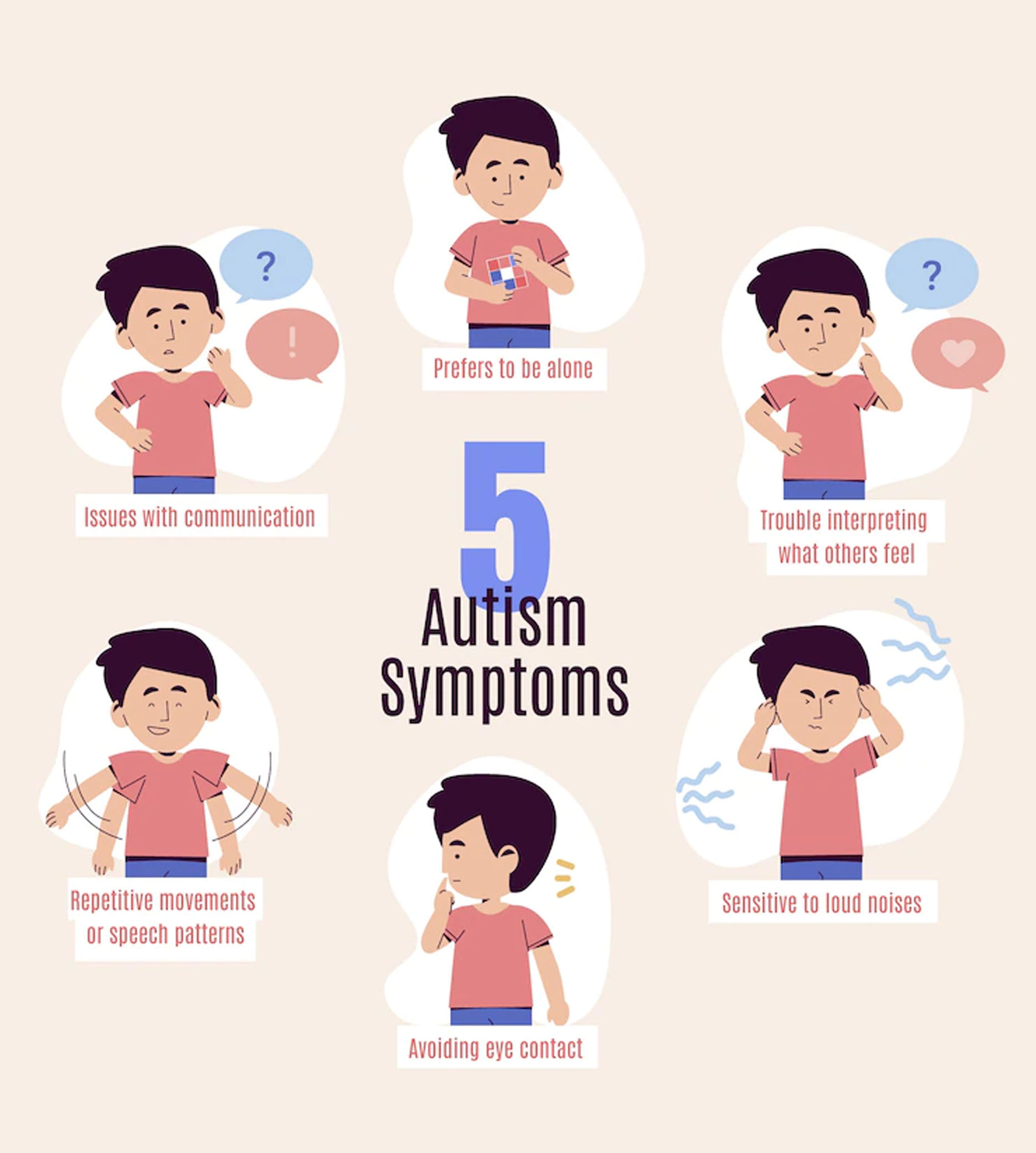
Social communication deficits may include:
- Decreased sharing of interests with others.
- Difficulty appreciating their own & others' emotions.
- Aversion to maintaining eye contact.
- Lack of proficiency with use of non-verbal gestures.
- Stilted or scripted speech.
- Interpreting abstract ideas literally.
- Difficulty making friends or keeping them.
Restricted interests and repetitive behaviors may include
- Inflexibility of behavior, extreme difficulty coping with change.
- Being overly focused on niche subjects to the exclusion of others.
- Expecting others to be equally interested in those subjects.
- Difficulty tolerating changes in routine and new experiences.
- Sensory hypersensitivity, e.g., aversion to loud noises.
- Stereotypical movements such as hand flapping, rocking, spinning.
- Arranging things, often toys, in a very particular manner.
Parent/caregiver/teacher concerns about the child's behavior should lead to a specialized evaluation by a developmental pediatrician, pediatric psychologist, child neurologist and/or a child and adolescent psychiatrist. This evaluation involves interviewing the parent/caregiver, observing, and interacting with the child in a structured manner, and sometimes conducting additional tests to rule out other conditions. In some ambiguous cases the diagnosis of autism may be deferred, but an early diagnosis can greatly improve a child's functioning by providing the family early access to supportive resources in the community.
The first step is seeking an evaluation. Most parents start with their pediatrician who is checking on developmental milestones
- If your child is under the age of 3 years, you can obtain an evaluation through your local early intervention system.
- If your child is over the age of 3, you can get an evaluation through your local school (even if your child does not go there). Contact your local school's preschool special education team to request an evaluation
- Example: Tomás is a 6-year-old boy whose family is troubled by Tomás' intense love of trains. His interest in trains, in addition to giving him great pleasure and serving to communicate his preferences, can sometimes lead to unintended consequences. For example, he gets angry and upset if his old trains are thrown away, or if his parents can't hold his train while he eats breakfast and gets ready for school in the morning. Teachers report that at school he tends to be very quiet and only listens when the topic of trains is brought up.
Treatment
There are several effective interventions that can help a child reach their full potential.:
- Applied behavioral analysis: Involves systematic study of the child's functional challenges, which is used to create a structured behavioral plan for improving their adaptive skills and decreasing inappropriate behavior
- Social skills training: Done in group or individual settings, this intervention helps children with autism improve their ability to navigate social situations
- Speech & language therapy: Can improve the child's speech patterns and understanding of language
- Occupational therapy: Can address adaptive skills deficits with activities of daily living, as well as problems with handwriting
- Parent management training: Parents learn effective ways of responding to problematic behavior and encouraging appropriate behavior in their child. Parent support groups help parents cope with the stressors of raising a child with autism
Tips for Parents
- Learn as much as possible about autism spectrum disorder.
- Provide consistent structure and routine.
- Connect with other parents of children with autism and resources in your community.
- Seek professional help for specific concerns.
- Take time for yourself and other family members.
- Understand your rights relating to your child's education, evaluation, and treatment.
- Having a child with autism affects the whole family. In addition to the unique contributions and characteristics of each person on the autism spectrum, navigating this process as a family can be stressful and lead to challenges. Paying attention to the physical and emotional health of the whole family is important.
Book Your
Appointment Now